Whole Bean vs Ground Coffee: Freshness, Grind & Which to Buy

Whole bean coffee stays fresh longer and gives you control over the grind; pre-ground coffee wins on convenience and needs no grinder. If you care most about flavor, buy whole bean and grind just before you brew. If you want coffee with zero extra steps in the morning, pre-ground is the honest choice — as long as you buy small bags and use them quickly. This guide explains why whole bean tastes fresher, when pre-ground actually makes sense, how to match the grind to your brewer, and which option fits how you really drink coffee.
The Quick Answer
Grinding breaks coffee beans open and exposes far more surface area to air. Once ground, coffee loses its aromatic compounds much faster than whole beans do, so pre-ground coffee goes stale in days to weeks after opening, while whole beans hold their flavor for weeks. That is the whole argument in one sentence: whole bean is fresher because it is ground later. If you own a grinder, or are willing to buy one, whole bean is the better cup. If you do not want another gadget or another morning step, pre-ground is the honest choice — as long as you buy small bags and use them quickly.
Why Whole Bean Coffee Stays Fresher
Freshness in coffee is mostly about two things: aromatic oils and carbon dioxide. Roasted beans are full of volatile aromatic compounds — the chemicals that make coffee smell like coffee — trapped inside the bean's structure. Grinding shatters that structure and multiplies the surface area exposed to oxygen, sometimes by hundreds of times. Oxygen then dulls those aromatics quickly, which is why coffee ground a month ago tastes flat next to coffee ground this morning, even when both came from the same bag.
The second factor is degassing. Freshly roasted beans release carbon dioxide for days after roasting, and that gas helps protect the beans from oxygen while it is escaping. Grinding releases most of that trapped gas at once. A sealed bag of whole beans keeps degassing slowly and stays lively longer; a bag of ground coffee has already spent that protection. None of this means pre-ground coffee is bad — it means the clock runs faster once coffee is ground, so freshness habits matter more for ground coffee than for whole bean.
As a rough guide, whole beans kept in an airtight container away from heat, light, and moisture taste their best within a few weeks of roasting, and hold up reasonably for a month or more. Ground coffee is best within about a week or two of grinding, and noticeably duller after that. These are rules of thumb, not expiry dates — storage conditions and roast style shift them — but the gap between the two is real, and it is the reason roasters and cafes almost always grind to order. Our guide to storing coffee beans covers containers, freezing, and the mistakes that stale coffee fastest.
Flavor: What You Actually Taste
Side by side, the difference is clearest in aroma and sweetness. Freshly ground coffee smells more vivid when you open the bag and when you bloom the grounds, and that aroma carries into the cup as a fuller, sweeter flavor. Pre-ground coffee brewed the same way can taste perfectly pleasant — and a well-roasted, freshly opened bag of ground coffee will beat stale whole beans every time — but it rarely has the same brightness, because some of the most delicate aromatics are the first to fade.
The gap is biggest for brewers that depend on fine, even particles and fresh gas, like pour-over and espresso. It is smallest for forgiving brewers like a drip machine or French press, where a correct grind size and ratio matter more than whether the coffee was ground ten minutes or ten days ago.
Grind Control: The Real Advantage of Whole Bean
Freshness is only half the story. The other half is grind size, and it matters for every brewer. Each brewing method needs a different particle size: too fine, and water extracts too much and the cup turns bitter; too coarse, and water extracts too little and the cup turns sour and weak. Pre-ground coffee locks you into one grind size — the one printed on the bag — while whole bean lets you dial the grind to the brewer in front of you.
That flexibility matters most if you own more than one brewer. A coarse grind suits a French press, a medium grind suits a drip machine, a medium-fine grind suits a pour-over, and a fine grind suits a moka pot or espresso. With whole beans and a grinder, one bag serves all of them. With pre-ground coffee, you either buy a different bag for each brewer or accept a compromise grind that suits none of them perfectly. Our V60 pour-over guide and moka pot guide both show how much of a brewer's result comes down to getting the grind right.
Here is a practical starting map:
- French press: coarse, like breadcrumbs — a fine grind slips through the mesh and makes a muddy, bitter cup.
- Drip machine: medium, like sand — the standard grind most bags labeled "ground" are milled to.
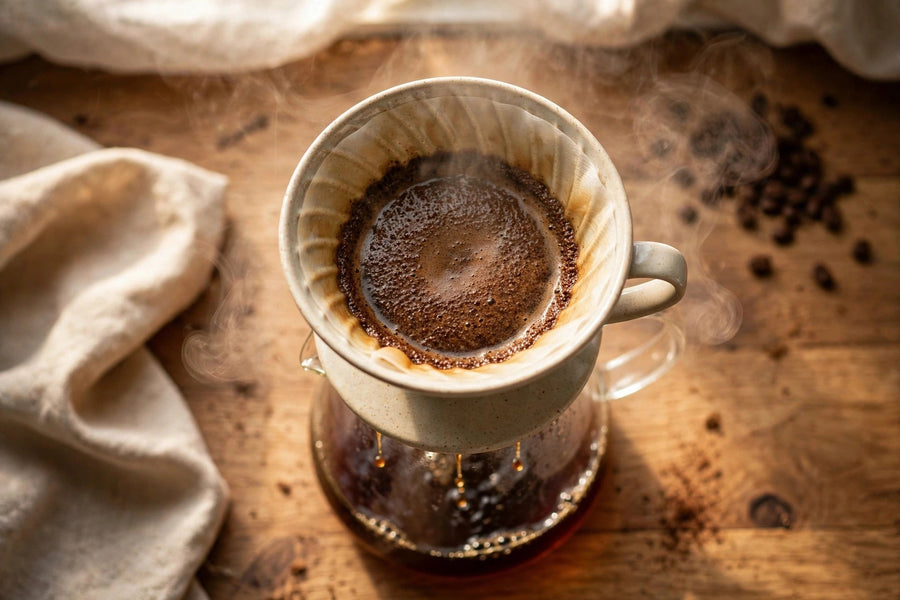
- Pour-over (V60 and similar): medium-fine, like finer sand — even particles matter here more than anywhere else.
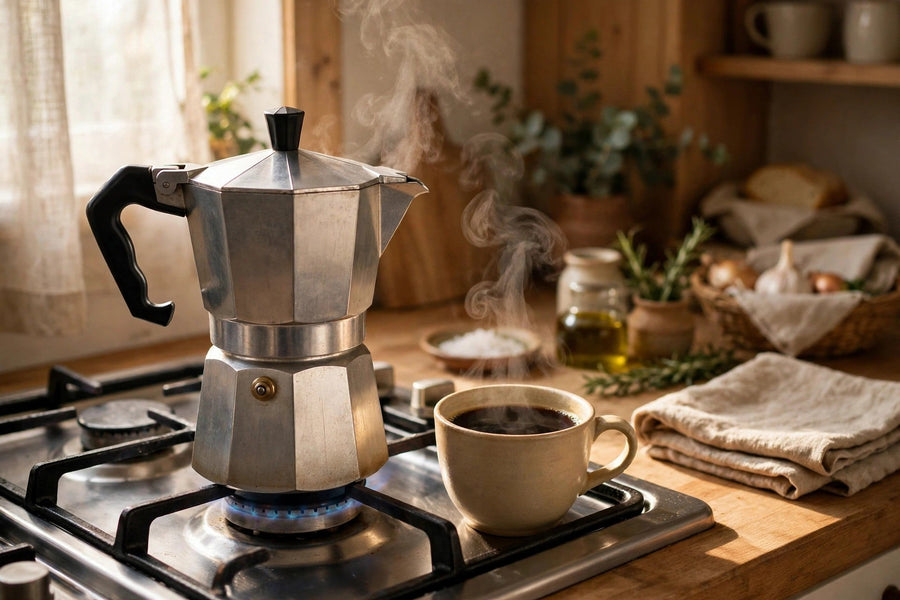
- Moka pot: medium-fine, finer than drip but coarser than espresso — and never tamped down.
- Espresso: fine, like powdered sugar — the one grind where a capable grinder is nearly essential, because tiny adjustments change the shot.
- Cold brew: extra coarse, like raw sugar — coarse grounds steep cleanly over many hours without turning harsh.
Grinders: Burr vs. Blade, and What You Actually Need
The case for whole bean depends on the grinder, so be honest about it. A burr grinder crushes beans between two burrs into even-sized particles, which is what every brewer wants. A blade grinder chops beans with a spinning blade, like a tiny blender, and produces a mix of dust and boulders — the dust over-extracts and turns bitter while the boulders under-extract and taste sour, all in the same cup. For drip, French press, and pour-over, even an entry-level burr grinder is a clear step up from a blade grinder. For espresso, grinder quality matters even more, because the fine grind window is so narrow.
You do not need the most expensive grinder to benefit from whole bean. A basic burr grinder, ground fresh each morning, will beat a blade grinder and most pre-ground coffee on flavor. The real costs of whole bean are the grinder itself, about thirty seconds of grinding each morning, and a little counter space.
Cost: Whole Bean vs. Ground, Honestly Compared
Per bag, whole bean and pre-ground coffee from the same roaster usually cost about the same — grinding is a step the roaster does for you, not a premium ingredient. Whole bean looks more expensive only when you count the grinder, which is a one-time purchase that pays for itself over many bags. Pre-ground can look cheaper until you count waste: a large bag of ground coffee that goes stale before you finish it is money poured down the drain, while whole beans bought in the same size stay drinkable longer.
Convenience: When Pre-Ground Is the Right Call
Pre-ground coffee has real advantages, and this guide would be dishonest to pretend otherwise. It needs no equipment, no grinding, and no dialing in — scoop, brew, drink. That matters on busy mornings, in offices, in rentals and hotel rooms, and for anyone who simply does not enjoy the ritual. It is also the right choice for brewers with a fixed grind requirement if you only own one brewer: a bag ground for drip is perfectly matched to a drip machine, with nothing to adjust.
Pre-ground also travels better than a grinder does. If you brew away from home, a sealed bag of ground coffee and a pour-over cone weigh nothing and need no power. And for cold brew, where the grind is extra coarse and the steep is long, the freshness gap narrows: a freshly opened bag of coarse-ground coffee makes excellent cold brew, because the long, gentle extraction is forgiving.
Whole Bean vs. Ground: Which Should You Buy?
Buy whole bean if you own a burr grinder (or plan to buy one), brew with more than one method, drink pour-over or espresso, or simply enjoy the ritual of grinding fresh. The flavor payoff is real, the grind flexibility is unmatched, and the beans stay fresh longer in the bag.
Buy pre-ground if you want the simplest possible morning, own one brewer and can buy coffee ground for it, travel with your coffee, or do not want another appliance. Choose small bags, store them airtight, and finish each bag within a couple of weeks of opening — that one habit closes most of the freshness gap.
Either way, the two habits that matter most are the same: buy freshly roasted coffee, and store it away from air, moisture, heat, and light. Freshly roasted ground coffee beats stale whole beans, and well-stored whole beans beat poorly stored anything.
Buying Whole Bean or Ground From Supreme Sip
Our coffees are roasted the day they ship, and every coffee comes in four grinds: Whole Bean, Standard, Espresso, and Coarse. Order Whole Bean if you grind at home — you get the full freshness window and the freedom to grind for any brewer, from French press to moka pot. Order Standard for a drip machine, Espresso for an espresso machine, or Coarse for a French press or cold brew, and the grind arrives matched to your brewer.
For flavored options: our French Vanilla Coffee is a small-batch roasted coffee with rich, creamy vanilla flavor and smooth, well-rounded notes — the vanilla carries well whether you grind fresh or buy it ground. Our Pumpkin Spice Coffee is flavored with pumpkin, cinnamon, and nutmeg (no clove), and its spice notes hold up in both whole-bean and ground form. Flavored coffee starts at $25.99 — check each product page for current bag sizes, grind options, and pricing, or browse our flavored coffee collection.
The Bottom Line
Whole bean coffee is fresher for longer and lets you match the grind to any brewer — that is why it makes the better cup for most home brewers who own a grinder. Pre-ground coffee is simpler, needs no equipment, and makes a very good cup when it is fresh, bought in small bags, and stored well. Pick the form that fits your mornings, not the one a coffee guide tells you to want: the best coffee is the fresh coffee you actually brew, ground right for the brewer you actually use.