Espresso vs Drip Coffee: Caffeine, Taste & Which to Drink

Espresso and drip coffee are the two most common ways to brew at home, and they answer different questions: which one gives you the caffeine you actually want, and which one tastes the way you want it to taste? Espresso is hot water forced through finely ground coffee under roughly 9 bars of pressure for about 25–30 seconds, producing a small, concentrated shot; drip coffee is hot water filtering slowly through a medium grind by gravity over several minutes, filling a full mug. This guide compares their caffeine per shot and per cup, the taste and texture differences, the equipment each demands, and which one fits the way you actually drink coffee.
The Quick Answer
A single 1 oz espresso shot carries roughly 60–75 mg of caffeine, while a standard 8 oz mug of drip coffee carries roughly 95 mg. So espresso is far stronger per ounce, but a normal mug of drip beats a single shot on total caffeine — that is the comparison most people actually care about. (For the full numbers by brew method, see our caffeine-by-brew-method guide.)
How Espresso Works
Espresso is a pressure method. Around 18 grams of finely ground coffee is packed into a portafilter, and hot water (typically 195–205°F) is pushed through it at roughly 9 bars of pressure. The industry-standard recipe is a 1:2 brew ratio — 18 grams in, about 36 grams of liquid espresso out — extracted in 25–30 seconds. Because the water spends so little time in contact with the grounds, the grind has to be fine: powdery, finer than table salt, with the particles packed tightly enough to create resistance. Change any variable and the cup changes: sour and thin usually means under-extracted (grind finer or slow the flow), while bitter and harsh usually means over-extracted (grind coarser or shorten the shot).
Pressure also creates espresso's signature feature: crema, the reddish-gold foam on top of a fresh shot. Under pressure, coffee's natural oils and CO2 emulsify into tiny bubbles that give the shot its syrupy body. A moka pot or stovetop brewer does not produce this — it brews with steam at a fraction of the pressure, so while it makes a strong, concentrated coffee, it is not true espresso.
The dose and ratio can move around the 1:2 baseline. A ristretto (about 1:1) uses less water for a shorter, more concentrated pull; a lungo (about 1:3) runs more water through the same puck for a longer, milder shot. Order a double shot — two 1 oz pulls, about 120–150 mg of caffeine — and you have roughly matched a standard mug of drip.
How Drip Coffee Works
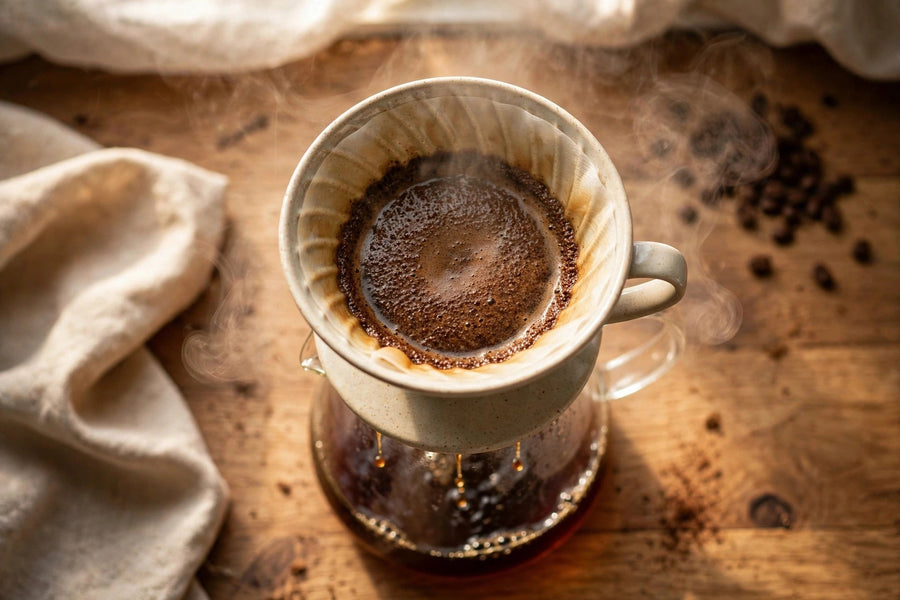
Drip coffee is a gravity method. Medium-ground coffee sits in a paper or metal filter, and hot water drips over it, draining slowly into the carafe below. The coffee-to-water ratio is much leaner than espresso — typically around 1:15 to 1:17 — and the water stays in contact with the grounds for several minutes rather than seconds. The grind is medium (about like sand): coarser than espresso, finer than a French press coarse grind. Our grind size chart lays out the exact texture for every method.
The biggest variable in drip coffee is the machine itself. The ideal brewing temperature sits in the 195–205°F window, and many budget drip machines brew cooler than that, which extracts less flavor and leaves the cup tasting flat or sour no matter how good the coffee is. If your drip coffee always tastes underwhelming, the machine's temperature — not the beans — is a prime suspect.
Caffeine: Per Ounce vs. Per Serving
This is where the two methods genuinely differ:
- Per ounce, espresso wins by a landslide. A 1 oz shot at 60–75 mg of caffeine is roughly three to four times as concentrated as drip, which runs about 12 mg per ounce.
- Per normal serving, drip wins. A standard 8 oz mug of drip (roughly 95 mg) beats a single 1 oz shot (roughly 60–75 mg). You simply drink much more of it.
- At higher doses, they converge. A double shot (about 120–150 mg) out-caffeinates a single mug of drip, and a triple-shot latte or a large drip mug both land well above 200 mg.
The practical takeaway: espresso's "stronger" reputation comes from drinking it fast and concentrated — it hits quickly. But if you are counting milligrams to get through a morning, the mug of drip is doing more work than the single shot. A double shot is the fair espresso-to-mug comparison.
Taste and Texture: Why They Feel Like Different Drinks
Because espresso is concentrated into 1–2 oz, everything about the coffee is compressed: more body, more intensity, and a wider swing between sour (under-extracted) and bitter (over-extracted). The crema adds a velvety, slightly bittersweet layer. Drip spreads the same compounds across 8–12 oz, so the cup is cleaner, thinner, and more forgiving — small mistakes in ratio or temperature shift the flavor mildly instead of ruining the shot.
The same coffee can taste notably different between the two methods. Drip's paper filter and long contact time pull out a balanced, easy-drinking cup; espresso's pressure and speed emphasize intensity and body. Neither is "better" — they are different presentations of the bean. (For how roast level interacts with each, see our light vs. medium vs. dark roast guide.)
Effort, Equipment, and Cost
Espresso demands more. You need a machine that can hold roughly 9 bars of pressure and steady temperature, and — more importantly — a good grinder. Espresso's fine grind is the hardest grind size to produce evenly, and an uneven grind under pressure means channeling: water carves one fast path through the puck and the shot comes out sour and thin. Whole bean, ground just before brewing, is the biggest single upgrade an espresso drinker can make, and dialing in (adjusting grind and dose until the 25–30-second window lands right) is part of the routine.
Drip demands less. A reliable machine, a medium grind, and fresh beans get you 90% of the way there. A burr grinder still helps, but drip's slower, lower-pressure extraction forgives grind inconsistency that espresso would punish. Batch brewing is the other win: drip fills a carafe for four people in the time it takes to pull two doubles. See our coffee-to-water ratio guide for scaling a batch.
Price follows the same split. A serviceable drip machine costs far less than any espresso machine worth buying, and the espresso grinder upgrade often costs more than the machine it pairs with. If you are starting from zero and mainly want good morning coffee, drip is the cheaper road in by a wide margin.
Which One Should You Drink?
Choose espresso when: you want a small, intense drink; you make milk drinks — lattes, cappuccinos, macchiatos, and flat whites all start with espresso because the concentrated shot holds its own against steamed milk; you want fast caffeine in one gulp; or you enjoy the dialing-in process.
Choose drip when: you want a full mug to sip over the morning; you brew for more than one person; you want the simplest consistent routine; or you prefer a cleaner, lighter cup you can drink black without intensity fatigue.
Many coffee drinkers end up with both. The americano — a double shot topped with hot water — is the bridge between them: espresso's body and intensity, diluted to drip-like sippability. An iced americano or a red eye (drip coffee with a shot added) plays the same crossover role in the other direction.
Brewing Either One With Supreme Sip Coffee
Our coffees are roasted the day they ship, and every coffee comes in four grinds: Whole Bean, Standard, Espresso, and Coarse. For espresso, order Whole Bean and grind fine just before pulling the shot — or order the Espresso grind directly if you do not have an espresso-capable grinder. For drip, Standard is the ready-to-brew choice, and Whole Bean ground medium (see the grind chart) gives the freshest result. Store whichever you open using our coffee storage guide — espresso's fine grind stales faster than whole bean.
For flavored options: our French Vanilla Coffee is a small-batch roasted coffee with rich, creamy vanilla flavor and smooth, well-rounded notes — it makes an excellent base for a home latte, since the vanilla carries through steamed milk. Our Pumpkin Spice Coffee is flavored with pumpkin, cinnamon, and nutmeg (no clove), and brews a great seasonal drip. Flavored coffee starts at $25.99 — check each product page for current bag sizes, grind options, and pricing.
The Bottom Line
Espresso is the most concentrated way to drink coffee — the strongest per ounce, the best foundation for milk drinks, and the most equipment-intensive method at home. Drip is the most practical — a full, balanced mug with the simplest routine and the lowest cost of entry. Per serving, a mug of drip out-caffeinates a single shot; a double shot flips the comparison back. Pick the one that matches how you drink, and grind fresh either way.