How to Store Coffee Beans: Keep Them Fresh (and Should You Freeze Them?)

Coffee starts losing its best flavor the moment it's roasted — not the moment it's brewed. Air, moisture, heat, and light slowly dull the aromas you paid for, and a bag of premium beans stored badly can taste flat in weeks. The good news: proper storage is simple. Here's how to keep coffee beans fresh, whether the freezer is ever a good idea, and what the best coffee container actually looks like.
Why Coffee Goes Stale: The Four Enemies
Roasted coffee is a fresh food. Once beans come out of the roaster, they start giving off carbon dioxide (a process called degassing) and their volatile aroma compounds begin escaping. Four things speed that up:
- Air: Oxygen is the biggest thief. Every exposure dulls aroma a little more — which is why a bag left rolled up loosely tastes so different from one that's sealed airtight.
- Moisture: Coffee beans are dry and porous; they'll pull moisture straight out of the air, which degrades flavor and texture. Damp beans are dead beans.
- Heat: Warmth accelerates every chemical reaction that makes coffee taste old. A bag parked next to the oven ages faster than the same bag in a cool pantry.
- Light: Direct light — especially sunlight — heats the beans and degrades the delicate compounds that carry flavor and aroma. This is why good coffee bags are opaque.
You can't stop staling entirely; you can only slow it down. Good storage is just keeping these four enemies away from your beans for as long as possible.
The Golden Rules of Coffee Storage
Everything that follows comes down to a short list:
- Keep it sealed: Store coffee in an airtight container or its original resealable bag, squeezed free of excess air before closing.
- Keep it cool: A pantry or cupboard at room temperature is ideal — cool, dry, and away from heat sources.
- Keep it dark: Opaque bags and containers protect beans from light. Never store coffee in a clear jar on a sunny counter.
- Keep it dry: Moisture is the enemy, so avoid humid spots like next to the stovetop, the dishwasher vent, or inside a steam-filled kitchen corner.
- Buy whole bean when you can: Whole beans stay fresh far longer than ground coffee. Grinding right before you brew is the single best freshness habit you can build.
Whole Bean vs Ground: Storage Differences
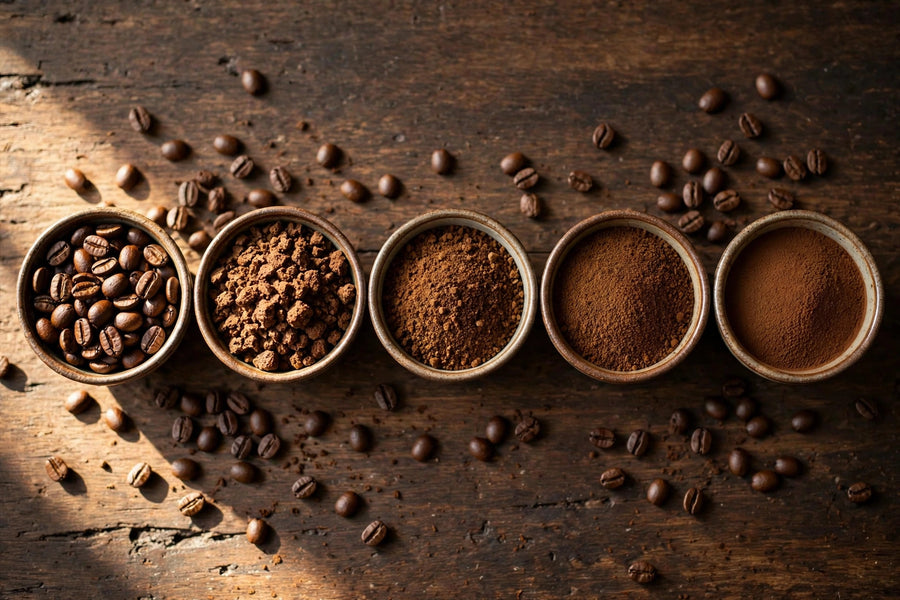
Grinding cracks open the bean's structure and exposes a huge amount of surface area to oxygen — so ground coffee stales much faster than whole bean. This is the trade-off behind every coffee purchase:
- Whole bean: Best within about 2–4 weeks of the roast date, kept sealed, cool, and dark. This is the sweet spot where aroma is fullest.
- Freshly ground: Once ground, the clock speeds up. Use it within 2–4 weeks of grinding — sooner if possible — and keep it sealed airtight between brews.
- Pre-ground bags: Coffee ground at the roastery is fine if it's freshly roasted and sealed, but it will fade faster than the same coffee bought whole. If you mostly drink drip, standard grind from a fresh bag is still a great cup — just don't let it sit open for weeks.
The practical rule: if you own a grinder, buy whole bean and grind what you need per brew. If you don't, buy smaller bags in the right grind for your brewer and keep them sealed. Either way, check our grind size guide to match the grind to your method — freshness and the right grind are the two biggest upgrades you can make.
Should You Freeze Coffee Beans? The Honest Answer
The freezer question comes up constantly, and the honest answer is: it depends on how you do it.
Freezing works when it's done right. If you've bought more whole-bean coffee than you can use within a few weeks, the freezer can genuinely extend its life. The key is to divide the beans into small, airtight portions — enough for a few days each — before freezing. Portioned freezing means you thaw only what you'll use, so the rest stays sealed and frozen.
The freezer ruins coffee when it's done wrong. Freezing is a mistake in these cases:
- Ground coffee you'll drink within a few weeks: freezing ground coffee you're actively using buys you almost nothing and adds moisture risk every time you open it.
- The daily bag: repeatedly freezing and thawing the same bag — taking it out each morning, letting condensation form, putting it back — is one of the worst things you can do to coffee. Each thaw cycle pulls in moisture and air.
- Loose, unsealed coffee: unprotected beans in the freezer absorb odors from everything around them. If the bag isn't airtight, your coffee will taste like the fish it shared shelf space with.
The simple version: the freezer is a long-term storage tool for whole beans, not a daily habit. For coffee you'll drink within the next couple of weeks, a sealed bag in a cool, dark pantry keeps it fresher with less fuss.
The Fridge Is Worse Than the Counter
Many people assume the fridge is a safe middle ground between the counter and the freezer. It's not. The fridge is humid, and coffee absorbs moisture and odors — garlic, leftovers, that half-onion — aggressively. Storing your daily coffee in the fridge will make it taste worse than leaving it in a sealed bag on the counter.
The only things coffee likes are: sealed, cool, dark, and dry. The fridge fails the dry test badly, so keep your coffee out of it.
How Long Does Coffee Stay Fresh? A Quick Timeline
Exact timelines vary by roast, bean, and storage — but these are the standard specialty-coffee guidelines:
- Whole bean, unopened: peak flavor within 2–4 weeks of the roast date; drinkable well beyond that, but aroma fades steadily.
- Whole bean, opened: once the bag is opened, aim to finish it within 2–3 weeks for the best cup.
- Ground coffee: best within 2–4 weeks of grinding; sooner is better, since aroma escapes fastest right after grinding.
- Whole bean, frozen in sealed portions: can hold quality for up to a few months; grind or brew straight from frozen (or thaw unopened) to avoid condensation.
- Brewed coffee: drink it fresh. Leftover hot coffee stales within the hour; cold brew is the exception — it keeps sealed in the fridge for up to about a week. See our cold brew guide for ratios and technique.
One habit that quietly pays off: buy coffee more often in smaller amounts rather than stockpiling one huge bag. A fresh bag every couple of weeks beats a giant bag going stale by half.
The Best Coffee Container (and What to Skip)
What should you actually put your beans in?
- The original bag: Quality roaster bags have a one-way valve that lets CO₂ escape without letting air in. A resealable valve bag is genuinely good storage — squeeze out the excess air and seal it tight.
- An airtight, opaque container: A ceramic or metal canister with a proper sealing lid is the gold standard for daily coffee. Opaque matters — a clear glass jar on the counter lets light in, which is why it underperforms.
- Small portions, if you freeze: If you're freezing for the long term, split beans into several small airtight bags or jars, and only thaw one at a time.
What to skip: clear canisters in sunlight, decorative jars with loose lids, and anything kept next to the stove, the espresso machine's heat vent, or a steamy kettle. And whatever the container, measure out what you need and reseal immediately — the bag left open on the counter "while it cools" is freshness leaking away. For measuring, our coffee-to-water ratio guide covers how much to use per cup.
Flavored Coffee Needs the Same Care
Flavored coffees — where beans carry added flavor notes like vanilla or pumpkin spice — follow all the same rules, with one extra: because they're more aromatic by design, they can also pick up outside odors more readily. Keep them sealed airtight and away from strong-smelling foods.
Our Pumpkin Spice Coffee is flavored with pumpkin, cinnamon, and nutmeg, and our French Vanilla Coffee is a small-batch roasted coffee with rich, creamy vanilla flavor and smooth, well-rounded notes — both are best kept in their resealable bags in a cool, dark spot and used within a few weeks of opening. Flavored coffee starts at $25.99; check each product page for current bag sizes, grind options, and pricing.
Fresh Coffee Is a Freshness Plan
Storage can only preserve what's there to begin with — which is why when the coffee is roasted matters as much as where you keep it. The fresher it is when it arrives at your door, the longer your storage habits have something worth preserving.
Our coffees are roasted the day they ship, and they come in Whole Bean, Standard, Espresso, and Coarse grinds — so you can order whole bean and grind right before brewing, the single best freshness habit there is. Store the sealed bag in a cool, dark pantry, finish it within a few weeks, and you'll taste what fresh coffee is supposed to taste like. That's the whole plan — no freezer gymnastics required.
Frequently Asked Questions
Should I store coffee beans in the freezer?
Only as a long-term strategy for whole beans you won't use within a few weeks — and only in small, airtight portions so you thaw one at a time. For coffee you're drinking now, a sealed bag in a cool, dark pantry works better with less fuss. Never repeatedly freeze and thaw the same bag.
Can I store coffee in the fridge?
Don't. The fridge is humid, and coffee absorbs moisture and odors, which flattens its flavor. A sealed bag or airtight container in a cool, dark pantry keeps coffee fresher than the fridge ever will.
How long do coffee beans last after opening the bag?
Aim to finish an opened bag within 2–3 weeks for the best cup. Kept sealed in a cool, dark place, whole beans stay good well beyond that, but aroma and sweetness fade steadily once the bag is open.
Is it okay to keep coffee in the bag it came in?
Yes — quality roaster bags have a one-way valve that lets CO₂ escape without letting air in, and resealable bags seal well. Squeeze out excess air before sealing, and keep the bag in a cool, dark spot rather than on a sunny counter.
Does freezing coffee ruin the flavor?
Not if it's done right: whole beans, divided into small airtight portions, frozen once, and used without repeated thaw cycles. What ruins flavor is freeze-thaw repetition, unsealed bags absorbing freezer odors, and freezing coffee you're actively using day to day.