Pour Over Coffee Guide (V60): Ratios, Grind & Technique

Pour-over coffee is the method that rewards you for paying attention — and the Hario V60 is its most famous classroom. A cone-shaped dripper, a paper filter, and a kettle are all it takes to brew one of the cleanest, most flavorful cups you can make at home. This guide covers the V60 recipe to start with (15 grams of coffee to 250 grams of water), the right grind, water temperature, pour technique, and how to fix a cup that tastes sour or bitter.
What Makes the V60 Different
The Hario V60 — designed by Hario, a Japanese glassware company, around 2005 — is the most widely used manual pour-over dripper in specialty coffee: a cone with 60-degree walls, spiral ridges, and a single large drainage hole at the bottom.
That large hole is the whole point. Unlike a drip machine, which controls flow for you, the V60 gives nearly all the flow control to the brewer — your grind size and pour speed decide how fast water drains through the coffee bed. Brewed well, it produces a clean, bright, complex cup with no sediment: every flavor note in the bean comes through without the oils of a French press or the uniformity of a drip machine.
What You'll Need
- A V60 dripper. Size 01 brews 1–2 cups; size 02 brews 1–4 cups. Plastic is cheap and holds heat well; ceramic looks better once warmed; any material brews great coffee.
- V60 paper filters. Sized to match your dripper (01 papers for the 01 dripper, 02 for the 02 — they are not interchangeable).
- A kettle, ideally gooseneck. The thin spout gives you the slow, steady pour this method needs.
- A digital scale with a timer. Pour-over is a weighed recipe — eyeballing does not work well here.
- A grinder. A burr grinder matters more for pour-over than for almost any other method — uneven grinds drain unevenly. See our coffee grind size chart for the full breakdown.
- Fresh coffee and good water. Whole bean, ground just before brewing, is the ideal; filtered water if your tap water tastes off.
The V60 Recipe: A Starting Point
Every V60 recipe is a version of the same classic ratio:
- Coffee: 15 grams (about 1 cup / 250 ml)
- Water: 250 grams — a 1:16.7 ratio
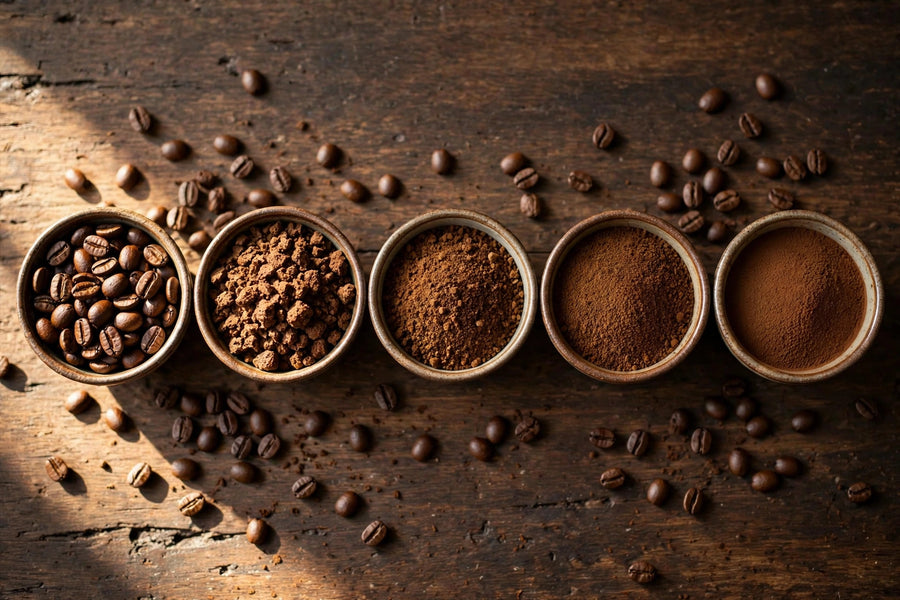
- Grind: medium-fine, about like table salt or coarse sand
- Water temperature: 200°F (93°C) — roughly 30 seconds off a full boil; most recipes land between 200 and 205°F
- Bloom: 30–45 grams of water for 30–45 seconds (about twice the coffee's weight)
- Total brew time: 2:30–3:30
Think of this as your baseline, not gospel. Brewing more? Scale the dose and water together — 30 grams of coffee to 500 grams of water for two cups — and expect the drawdown to take a little longer. Then adjust one variable at a time by taste.
Brewing Step by Step
1. Heat water and rinse the filter. Bring water to a boil, then let it settle to about 200°F. Fold the filter along its seam, seat it in the dripper, and pour hot water through until fully soaked — this washes out the paper taste and preheats the dripper and your mug or carafe. Discard the rinse water.
2. Dose and grind. Weigh 15 grams of coffee, grind medium-fine, and add it to the dripper. Give it a gentle shake to level the bed — a flat bed is the foundation of even extraction.
3. Bloom (0:00–0:45). Start your timer and pour 30–45 grams of water in slow circles, wetting all the grounds. You will see the coffee swell and bubble as trapped CO2 escapes — that is the bloom. Fresh coffee blooms dramatically; older coffee barely moves. Let it sit until about 0:45.
4. First pour (0:45–1:15). Pour in slow, steady spirals from the center outward, then back toward the center — a stream about the thickness of a pencil. Bring the total water to about 120–150 grams. Keep the pour off the paper filter: water that hits the paper runs straight down the side and misses the coffee entirely, which weakens the cup.
5. Second pour (1:15–1:45). Keep the spiral pattern going and bring the total to 250 grams. Pulse-style pours — adding water in stages rather than all at once — keep the bed temperature steadier and the extraction more even.
6. Drawdown (1:45–3:30). Let the water drain completely. A gentle swirl after the last pour settles the bed flat. Aim to finish between 2:30 and 3:30 total. Remove the dripper, swirl the cup to integrate the flavors, let it cool briefly, then taste.
Why Each Variable Matters
Pour-over is just extraction management: hot water pulling flavor compounds out of ground coffee. Three variables steer almost everything.
Grind size sets the clock. Finer particles expose more surface area, so water extracts them faster and drains slower; coarser particles do the opposite. Your total brew time is a grind diagnostic: finishing well under 2:30 usually means the grind is too coarse (water raced through), and dragging past 3:30 usually means it is too fine.
Ratio sets the strength. The 1:16.7 starting point makes a balanced cup — move toward 1:15 for bolder or 1:17–1:18 for lighter. Change the ratio, not the grind, when all you want is a stronger or weaker cup — see our coffee-to-water ratio guide for scaling to any batch size.
Temperature sets the intensity. Hotter water (closer to 205°F) extracts more aggressively; cooler water (around 195–200°F) more gently. Off-boil and 30 seconds of waiting lands most kettles right in the window without a thermometer.
Pour Technique: The Part People Skip
The dripper gives you control; the pour is how you use it. Four habits matter:
- Slow and steady beats fast and aggressive. A thin, continuous stream agitates the bed evenly; dumping water in floods it and stalls the drawdown.
- Spiral from the center out, then back in. Concentric circles wet the grounds evenly without blasting channels through them.
- Keep water off the paper. Water on the filter runs straight down the side, missing the coffee and thinning the cup.
- Keep the bed flat. A flat bed drains evenly; a cratered one channels — water carving one quick route through the grounds and ignoring the rest. Channeling is the most common invisible fault in pour-over: the cup tastes thin and sharp even though the recipe looks right. Level beds and gentle pours prevent it.
You do not need latte-art hands for this. A gooseneck kettle and a conscious effort to pour slowly get you 90% of the way there in your first week.
Troubleshooting: Sour, Bitter, or Just Off
Your taste buds are the best diagnostic tool you own. Brew the same coffee at the same ratio, changing one variable, and compare:
- Sour, salty, thin, or tea-like: under-extracted. The water got through too quickly or too cool. Grind finer, slow the pour, or raise the temperature a degree or two.
- Bitter, harsh, drying, or ashy: over-extracted. Grind coarser or pour a little faster. If you are finishing past 3:30, it is almost certainly the grind.
- Thin, watery, or stalling: check for channeling — an uneven bed or water running down the paper. Level the bed, keep pours off the filter, and try a gentle swirl after the bloom. If it stalls and drips forever, the grind is too fine.
- Tastes papery: the filter was not rinsed enough. Rinse thoroughly next time — it takes more hot water than most people expect.
One caution: very dark roasts can taste bitter by design, and no technique change will fix that. If you suspect the roast rather than the recipe, see our light vs medium vs dark roast guide.
V60 vs Chemex vs Kalita: A Quick Comparison
All three are pour-over brewers, and the differences are real but modest:
- V60 (conical, ridged walls): the most control and the most technique-sensitive — your pour drives the drawdown. Best for brewers who want to tinker.
- Chemex: much thicker filters produce an exceptionally clean, slightly lighter-bodied cup. The thicker paper slows the flow, so grind a touch coarser than for the V60.
- Kalita Wave (flat bottom): the flat bed and three small drain holes make drawdown more consistent and more forgiving of uneven pours.
The recipe above is tuned for the V60. The same ratios work as a starting point for the others — just watch the drawdown time and adjust the grind to match.
Which Coffee to Brew in a Pour-Over
Our flavored coffees brew beautifully this way. Our French Vanilla Coffee is a small-batch roasted coffee with rich, creamy vanilla flavor and smooth, well-rounded notes — the pour-over format lets that vanilla come through with unusual clarity. Our Pumpkin Spice Coffee is flavored with pumpkin, cinnamon, and nutmeg (no clove), and it makes a remarkably clean fall cup in the V60.
Our coffees are roasted the day they ship, and they come in Whole Bean, Standard, Espresso, and Coarse grinds. For pour-over, Whole Bean ground medium-fine just before brewing is the best version — our grind size chart shows exactly what medium-fine looks like. Flavored coffee starts at $25.99; check each product page for current bag sizes, grind options, and pricing.
The Short Version
Start with 15 grams of coffee to 250 grams of water at 200°F, medium-fine grind, a 30–45 second bloom, and slow spiral pours finishing between 2:30 and 3:30. Rinse the filter, keep water off the paper, level the bed, and change one variable at a time — tasting honestly will get you to a great cup faster than any gadget.
Frequently Asked Questions
What is the best coffee-to-water ratio for pour-over?
Start at 1:16.7 — 15 grams of coffee to 250 grams of water for one cup. Move toward 1:15 for a bolder cup or 1:17–1:18 for a lighter one. Scale both numbers together for bigger batches.
What grind size is best for a V60?
Medium-fine, about the texture of table salt or coarse sand. Finer than a drip machine, coarser than espresso. If your brew finishes well under 2:30, go finer; well over 3:30, go coarser.
What water temperature should I use for pour-over?
Around 200°F (93°C) — roughly 30 seconds off a full boil. Most recipes land between 200 and 205°F. Cooler water extracts more gently; hotter water more aggressively.
Do I need a gooseneck kettle for pour-over?
Not strictly, but it helps a lot. The thin spout makes the slow, steady spiral pours this method needs far easier to control. A regular kettle can work if you pour carefully and slowly.
Why does my pour-over taste sour?
Sourness usually means under-extraction: the water moved through the coffee too fast or too cool. Grind finer, pour more slowly, or raise the water temperature slightly — one change at a time.