Does Coffee Go Bad? How Long Coffee Actually Lasts

Yes, coffee goes bad — but usually not in the way people mean. Dry coffee beans and grounds rarely become unsafe to drink, yet they do go stale: the aroma fades, the flavor flattens, and the cup you loved last month tastes dull today. Brewed coffee is a different story. Once it is in the pot or the cup, the clock runs much faster, and coffee left sitting out all day is a cup to pour away, not to reheat. This guide explains how long whole beans, ground coffee, brewed coffee, and cold brew actually last, how to tell when coffee has turned, and the storage habits that keep it tasting fresh for longer.
The Quick Answer
Coffee has two different clocks: a flavor clock and a safety clock. For dry beans and grounds, the flavor clock is the one that matters. Whole beans taste their best within a few weeks of roasting, and ground coffee within about a week or two of grinding, after which the cup gets progressively flatter. Neither suddenly becomes dangerous on a particular date — they just stop tasting like good coffee. For brewed coffee, both clocks run fast. A pot left on a hot plate for hours tastes stale and bitter, and coffee with milk or cream in it should be treated like any perishable drink: refrigerate it promptly, and discard it if it has sat out for hours. When in doubt: if it smells flat, sour, or off, or you cannot remember when you brewed it, pour it out.
Why Coffee Goes Stale
Freshness in coffee is mostly about aromatics and oxygen. Roasted beans hold volatile aromatics — the chemicals behind coffee's rich smell — trapped inside the bean. Grinding breaks that structure open and multiplies the surface area exposed to air, so ground coffee loses those aromatics much faster than whole beans do. Light, heat, and moisture speed the process up, and bean oils slowly turn rancid with long air exposure, giving very old coffee its cardboard-like, papery taste.
Freshly roasted beans also release carbon dioxide for days after roasting, and that escaping gas helps protect the beans from oxygen while it lasts. Grinding releases most of that trapped gas at once, which is one more reason ground coffee fades faster. None of this is a reason to panic about an opened bag — it is a reason to buy amounts you will finish while the coffee is still lively, and to store what you have properly. Our guide to storing coffee beans covers containers, freezing, and the mistakes that stale coffee fastest.
Whole Beans: How Long Do They Last?
As a rough guide, whole beans kept in an airtight container away from heat, light, and moisture taste their best within a few weeks of roasting, and hold up reasonably for a month or more. Unopened, sealed bags last longer than opened ones, because the bag keeps oxygen out until you break the seal — but even a sealed bag will not taste freshly roasted a year later. Once opened, the countdown is really about how much air reaches the beans each day: a bag rolled shut and clipped lasts better than a bag left open on the counter, and a small airtight canister beats both.
There is no single expiry date to trust here: a roast date is far more useful than a "best by" date if your bag carries one. If there is no roast date, use the date you opened the bag as your starting point and plan to finish whole beans within about a month of opening. After that, the coffee is not ruined — just noticeably duller.
Ground Coffee: How Long Do They Last?
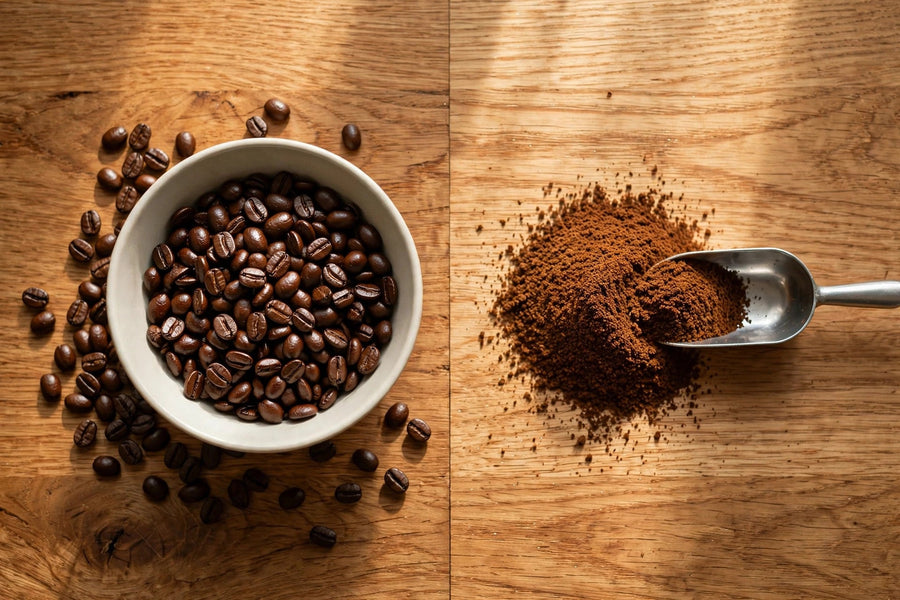
Ground coffee runs on a shorter clock. It is best within about a week or two of grinding, and noticeably duller after that, especially once the bag has been opened and resealed several times. This is the same reason our whole bean vs. ground coffee guide recommends grinding just before you brew whenever you can: whole beans give you the full freshness window, while pre-ground coffee spends that window before it ever reaches your kitchen.
That does not make pre-ground coffee a bad choice — it makes bag size and storage matter more. Buy small bags you will finish within a couple of weeks of opening, keep them airtight between brews, and do not leave the bag open on the counter. A freshly opened small bag of ground coffee will taste better than whole beans that have sat open for three months, because freshness is about time and air exposure, not just form.
Brewed Coffee: How Long Is It Good For?
Brewed coffee is best within minutes to an hour of brewing, while it is still hot and its aromatics are intact. A pot kept warm on a hot plate for hours does not stay fresh — the heat keeps cooking it, and the cup turns bitter, flat, and stale-tasting. Reheating cold coffee in the microwave does not restore it either; it warms a stale cup, it does not un-stale it.
Black brewed coffee left at room temperature tastes stale within a few hours, and that is reason enough to discard it. Coffee with milk, cream, or another perishable addition should be treated like milk, not like coffee: refrigerate it promptly, and do not leave it sitting out for hours. As a practical habit, brew what you will drink, refrigerate only leftover black coffee you genuinely plan to use for iced coffee, and pour out anything you cannot account for. If brewed coffee smells sour or off, or has visible mold, discard it.
One reassuring point: stale coffee still contains caffeine, which is relatively stable — so an old cup can still wake you up while tasting flat. Flavor, not caffeine, is the right test for whether coffee has gone bad.
Cold Brew and Iced Coffee: How Long Do They Last?
Cold brew lasts longer than hot-brewed coffee because it is made and stored cold, but it is not immortal. Refrigerated cold brew concentrate, kept sealed in the fridge, generally tastes good for about a week, and sometimes up to about two weeks, before it starts tasting flat or sour. Ready-to-drink cold brew, already diluted, fades a little faster, so finishing it within about a week of making it is a sensible target. Keep it refrigerated from the moment it is brewed, use a clean, sealed container, and discard it if it smells sour or off.
Leftover hot coffee poured over ice is not cold brew, and it does not keep like cold brew: use refrigerated leftover hot coffee within a day or so for iced coffee, and discard it if you are unsure how long it has been in the fridge. The fridge slows staling down; it does not stop it.
Instant Coffee and Coffee Pods
Instant coffee is the longest-lasting form most people buy, because it is already dried and sealed. An unopened jar keeps for many months, and an opened jar kept dry and tightly closed stays usable for months, though its aroma fades gradually. Its enemy is moisture: a wet spoon or a damp cupboard turns it clumpy and dull, so keep it dry and sealed.
Single-serve pods sit in between: the sealed pod protects ground coffee from air better than an opened bag, so pods stay fresher than loose grounds over the same period — but they still fade over months. Check the date on the box, store pods cool and dry, and do not stockpile more than you will use within a few months.
How to Tell If Coffee Has Gone Bad
Your nose is the best test. Fresh coffee smells vivid and inviting when you open the bag or bloom the grounds; stale coffee smells faint, flat, or papery, and very old coffee can smell rancid, like old cooking oil. The taste test backs it up: stale coffee tastes dull, woody, or cardboard-like, with the sweetness and brightness gone, even when the brew method and ratio are exactly right. If a coffee you brewed correctly suddenly tastes flat across several brews, the beans or grounds are the likeliest cause, not your technique.
Look, too: beans or grounds that look or smell musty, or any brewed coffee with visible mold, should be discarded. Before you brew, open the bag and smell the coffee — if the aroma is faint before water ever touches it, no grinder setting or pour technique will put it back.
Can You Save Stale Coffee?
Honestly, only partly. You cannot restore lost aromatics, but stale coffee can still work brewed a little stronger, as iced coffee where cold and dilution soften dullness, or in baking where coffee is a background flavor. What does not work is grinding finer, brewing hotter, or steeping longer to chase flavor that is no longer there — those moves usually just add bitterness to a flat cup.
The better fix is preventive: buy smaller bags, grind fresh when you can, and store coffee airtight away from heat, light, and moisture. If you buy in bulk, freezing whole beans in small, airtight portions — thawing only what you will use, without refreezing — extends their life noticeably. Our grind size chart helps you match the grind to your brewer once you have fresh coffee in hand.
Buying Fresh Coffee From Supreme Sip
Our coffees are roasted the day they ship, and every coffee comes in four grinds: Whole Bean, Standard, Espresso, and Coarse. Ordering Whole Bean gives you the longest freshness window at home, because you grind only what you brew. Ordering Standard for a drip machine, Espresso for an espresso machine, or Coarse for a French press or cold brew means the grind arrives matched to your brewer — just buy a size you will finish within a couple of weeks of opening.
For flavored options: our French Vanilla Coffee is a small-batch roasted coffee with rich, creamy vanilla flavor and smooth, well-rounded notes. Our Pumpkin Spice Coffee is flavored with pumpkin, cinnamon, and nutmeg (no clove). Flavored coffee starts at $25.99 — check each product page for current bag sizes, grind options, and pricing, or browse our flavored coffee collection.
The Bottom Line
Coffee goes bad by losing flavor, not by suddenly becoming unsafe — except for brewed coffee left out too long, especially with milk in it, which you should discard. Whole beans give you weeks of peak flavor, ground coffee gives you about a week or two, brewed coffee gives you hours, and refrigerated cold brew gives you about a week. Buy fresh, buy small, store it airtight, and trust your nose: when coffee stops smelling like coffee, it is time for a fresh bag.